
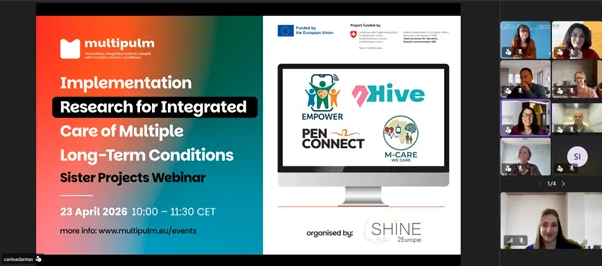
Online | 23 April 2026
On 23 April 2026, the HIVE Project participated in a sister-project webinar bringing together initiatives funded under the Horizon Europe topic “Implementation research for the management of multiple long-term conditions in the context of non-communicable diseases”, within the framework of the Global Alliance for Chronic Diseases.
The webinar was led by MULTIPULM and organized by SHINE 2Europe. It created a valuable opportunity for projects funded under the same call to come together, exchange updates, and explore how they can collaborate more closely in the future.
The participating projects included MULTIPULM, EMPOWER, HIVE Project, M-CARE, and PEN-CONNECT. Each project had the opportunity to share information about its objectives, ongoing activities, target groups, and expected outcomes. This exchange helped participants better understand the different approaches being used across the projects and identify areas where their work may complement one another.
For the HIVE Project, the webinar was an important opportunity to present its work and connect with sister projects addressing related challenges. Although each project has its own specific focus, all participating initiatives share a common interest in improving care for people living with multiple long-term conditions and supporting stronger, more responsive health systems.
The discussions focused on collaboration, knowledge exchange, and the development of synergies between the projects. Participants explored how they could share experiences, exchange good practices, and identify opportunities for joint activities. These types of exchanges are essential for strengthening the collective impact of projects working within the same research and policy framework.
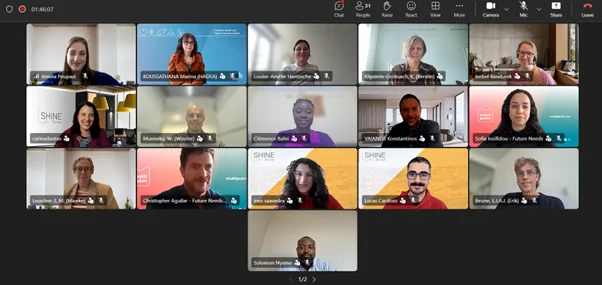
The webinar also highlighted the importance of building a collaborative network across Horizon Europe projects. By creating links between sister projects, partners can support mutual learning, avoid duplication of efforts, and contribute to a wider understanding of how implementation research can improve care for people living with chronic and multiple long-term conditions.
This collaboration is already taking shape through a shared synergies page, where the sister projects are featured together. The webinar further strengthened these connections and provided a foundation for continued dialogue and future cooperation.
Through its participation, the HIVE Project continues to support European efforts to advance innovation in healthcare, improve long-term care pathways, and promote more person-centered approaches for people living with HIV and other long-term conditions.